
Expert P3 Project Manager Bahram Solhjou Provides Key Insights
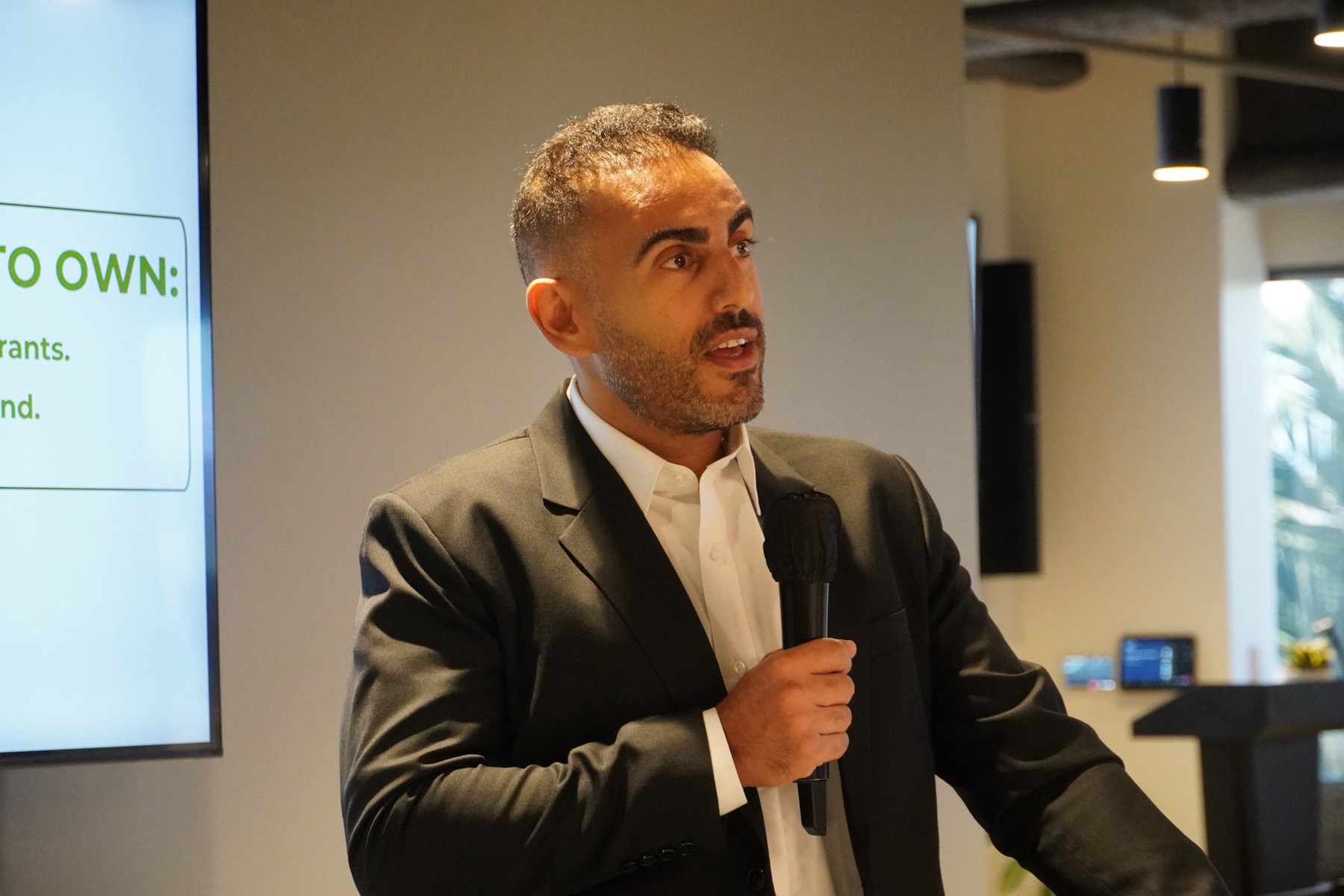
Finding ways to reduce project costs and reducing the public risk are two top reasons for pursuing public-private partnerships (P3) according to Bahram Solhjou, the principal project manager at the Los Angeles County Internal Services Department.
Feature
Finding ways to reduce project costs and reducing the public risk are two top reasons for pursuing public-private partnerships (P3) according to Bahram Solhjou, the principal project manager at the Los Angeles County Internal Services Department.
Bahram was the featured speaker at Sunstone Cities’ P3 Strategy Series on Sept. 19. He has plenty of experience with P3 projects in Long Beach – he worked on the battery storage component of the Long Beach Civic Center rebuild and more recently helped put together a deal to install public EV chargers in the city.
“Governments look to public-private partnerships when there are capital needs,” Bahram said. “And there’s the matter of tax benefits – they can make a big difference for private investors. But the city or county can’t use them, so…”
Partnering with private developers can be more efficient, Bahram added. Some development groups can take a project from design through construction and operation.
That approach can reduce the government’s risk by putting the onus on the developer to complete the project on time and within budget.
“While the government always has responsibilities, this allows the risk to be shared,” Bahram said. “It provides a safety net.”
Governments considering a public-private approach have other considerations before signing an agreement. For example, there has to be an expectation the community will continue to see benefits after the contract has been completed – that the new asset will survive for continued use.
Interests of other stakeholders – the community residents, investors, etc. – have to be taken into account. If there is potential opposition, legal challenges have to be considered.
“You can’t ask a public agency to sign a contract when there is legal risk involved,” Bahram said. “The private sector is answering to its investors. The public sector is answering to its residents.”
And the final say for a project to go forward rests with elected officials – the City Council, the County Board of Supervisors. Arguments have to be strong to convince them.
There are significant advantages to P3 projects, Bahram said. They typically provide a quicker turnaround, and costs can be reduced through grants and other financial incentives available to the private sector.
“Sometimes, they private developers come up with better ways to get things done,” Bahram said. “But ultimately, it’s got to be a win-win scenario to work.”
Next on the P3 Strategy Series calendar on Friday, October 3rd at 1PM is Andy Nakahata, the newly appointed Executive Director & CEO of the California Infrastructure and Economic Development Bank (IBank). RSVP at registration. For more information, contact Ryan Phong at Ryan.Phong@SunstoneCities.com.
About Sunstone Cities
Sunstone Cities is an economic development consulting firm that helps local government leaders unlock economic development, new business formation, and job growth. Data-driven insights, industry expertise and public-private partnerships help cities revitalize economies, attract businesses and better monetize community assets. Visit www.sunstonecities.com to learn more.
© Sunstone Cities 2025
More News
Continue reading
August 3, 2026
Cities sought for next Sunstone Economic Development Challenge @ USC Price
Cities can apply for free economic development assistance through the fifth annual Sunstone Economic Development Challenge @ USC Price. Article originally published on PublicCEO.
April 24, 2026
CSULB Student Entrepreneurs Win Support, Advice At Sunstone Innovation Challenge
Student entrepreneurs at California State University, Long Beach, got a boost Tuesday, April 21, at the 2026 Sunstone Innovation Challenge presented by the CSULB Institute for Innovation & Entrepreneurship.
April 24, 2026
USC Price Students Consult for Municipalities in Sunstone Economic Development Challenge
An expansive plan to create a workforce pipeline for new high-tech businesses in Riverside took the top prize April 23 at the Final Pitch event for the Sunstone Economic Development Challenge @ USC Price.